
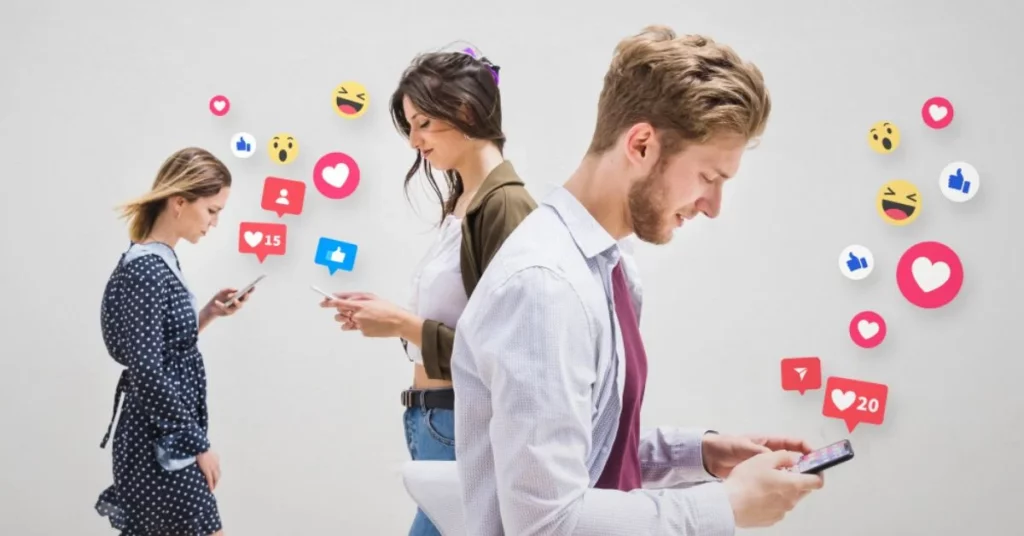
Have you ever felt like your life is being repurposed as a highlight reel by an audience that you don’t really see? This is the enticement of our digital platform, which is where social media has transformed the way we communicate. It’s not just a scroll and scrolling; it’s a continuous flow of information, connections, and, let’s get real, comparison. We’re aware that social media has amazing benefits, including instant communication, and numerous potential for business.
Table of Contents
The impact of social Media on our Lives
Social media has revolutionized the way we interact with each other to exchange messages, communicate and consume content. Platforms such as Facebook, Instagram, Twitter and TikTok have become indispensable tools for professional and personal interactions. However, while social media provides many benefits, it also has its own challenges that impact our lives daily.
Social Media and Mental Health
1. More Feelings of Loneliness and Despond
While social media is a way to connect us via digital channels, it also causes people to feel lonely. Studies have shown that people who use social media frequently are more likely to feel lonely. If I go through Instagram over a long period of time, I feel worse the next day. The majority of people post their most memorable moments, which makes their daily lives appear dull. A study showed that limiting the amount of time spent on social media to 30 minutes a day actually diminished levels of isolation.
2. The triggers for depression and anxiety are Depression as well.
Social platforms are perfect for anxiety. The constant comparison with others creates a feeling of inadequacy. Teenagers are particularly affected when they see others having fun with no one else. Each time they receive a notification, stress chemicals are released within the brain. The rate of depression has increased with the use of social media and the most stressed users experiencing the highest levels of symptoms. The pressure to keep the perfect image online exhausts many people mentally.
3. Body Image Problems
Social media bombards its users with perfect faces and bodies. Editing tools and filters produce absurd standards. Women of all ages suffer the most from these kinds of comparisons. Many suffer from body dysmorphia, or eating disorders following a prolonged exposure to content about beauty and fitness. Even knowing that photos are edited can’t stop the negative impacts on self-esteem. The continuous streaming of “perfect” bodies ruins people’s perception of their appearance.
4. Positive Support Communities
Despite its negative aspects that social media has, it hosts useful support groups for mental health. Patients with rare illnesses can find people who can relate to their challenges. These communities offer support as well as encouragement and a sense of the feeling of belonging. In the event of a pandemic lockdown, these connections on the internet were lifelines for people who felt isolated. A lot of users have reported being less lonely with their mental health issues due to these groups. The anonymity of certain platforms allows people to discuss sensitive topics more openly.
5. Sleep Changes
The use of social media at night affects sleep quality. The blue light from screens reduces the production of melatonin. A person’s mood before bed can increase alertness at a time when the body is supposed to be slowing down. Sleep deprivation can increase depression and anxiety, creating an unbalanced cycle. A lot of people say they check their social networks as a final thing they do before bed and the first thing after waking. This disrupts sleep patterns and causes users to be feeling exhausted throughout the day.
Student Social Media: A Guide for
1. Academic Distraction
Social media can seriously impact study time. Students are often checking their notifications while doing their homework. This can make learning less efficient. Five minutes of break quickly turns into hours of scrolling. Many students struggle with their the readings due to they’ve noticed that their concentration span has diminished because of social media. Homework that was once a half hour has now taken three due to constant interruptions. Apps such as TikTok make it difficult to get back to demanding academic assignments.
2. Tools for Collaboration and Research
Despite all the distractions, social media platforms can aid students in working together. Study groups collaborate via WhatsApp as well as Facebook. Students exchange notes and other sources across various groups and even schools. YouTube tutorials help students understand complex subjects in a simple manner. Flashcards and quiz tools help students learn more interactively. Teachers are increasingly using social features to help students to make learning more enjoyable and accessible.
3. Information Overload
Students have to deal with a plethora of information available on social media. The task of separating reliable sources from fake ones is a challenge for adults too. A lot of students aren’t equipped to critically evaluate content on the internet. Information that is inaccurate and misleading can quickly spread via networks of students. It is difficult to maintain the social feeds and schoolwork can cause stress and anxiety. Many teenagers complain of feeling like they are always in the back on academic and social aspects.
4. Digital Literacy Development
Using social media teaches important digital skills. Students learn how to communicate professionally on the internet. They are taught how to create content, managing privacy and creating personal brand identities. These experiences prepare them for working environments which are increasingly focusing on digital fluency. Understanding the algorithms of platforms and distribution of content helps students navigate the ever-changing information environment. Schools are now recognizing these skills as crucial for future jobs.
5. The Bully and Social Pressure
School social interactions are now throughout the day, on the internet. The absence of group chats or social events is a traumatic experience for youngsters. Cyberbullying affects students even at home, providing an unsecure space. Stress from school and social pressures, creating a huge anxiety. Students are often pressured to keep perfect online photos while achieving at school. This unrealistic standard causes anxiety, depression, and anxiety among students even as old as the age of elementary school.
Social Media for Business
Social media has revolutionized the way companies interact with their customers. Platforms such as Instagram, Facebook, and LinkedIn enable companies to establish close relationships with customers and compete against bigger brands for a fraction of the cost. The popularity of viral content increases brand recognition, and real-time engagement helps businesses improve rapidly based on feedback from customers.
Local businesses are now able to reach the world with targeted advertisements which are less expensive than print or television advertisements. Features such as Instagram Shops, and Facebook Marketplace create new revenue streams. However, negative feedback spreads fast, requiring constant monitoring. Poor reviews can hurt sales for many years.
Companies must take care of their online reputations and adapt to changes in social media. It is more important to be authentic than perfectionism. Brands must share behind-the-scenes content and interact with their customers in person. Video content is the most popular, and requires new abilities. Social media marketing is focused on the measurement of results, analyzing the engagement of users and ROI. As privacy issues increase and businesses are forced to balance data usage with ethical.
The Future of Social Media
1. VR and AR for immersive experiences. VR
Social media platforms are expected to provide more virtual reality features. Instead of simply posting pictures, users will be able to post entire virtual environments. Facebook (Meta) has already invested billions of dollars to create virtual worlds in which friends interact in avatars. It will be a different shopping experience as customers “try” products in virtual environments before purchasing. Business meetings will take place in digital spaces that are shared rather than video conferences. These new technologies blur the distinction between physical and digital interactions and will create new ways of social interaction.
2. AI-Powered Content Creation
Making content for social media is becoming easier thanks to AI tools. Apps already suggest captions, and modify images automatically. In the near future, AI will generate entire posts using simple instructions. Smaller companies will compete against larger corporations with these instruments. Influencers will be able to produce more content in less time. However, this will make platforms more flooded with content than ever before, making genuine human connections more useful. Users will require new skills to distinguish AI-generated content from the human-created.
3. Platforms that are focused on privacy
As the issue of data privacy grows and new platforms that focus on privacy will be popular. These platforms will provide security and limited data collection and short-term content. Users will have greater control over who has access to their personal information. Paid subscription models will be replacing advertising on certain platforms. This change will force traditional social media firms to improve their privacy policies. The younger generation of users show a growing attraction to platforms that secure their personal information more effectively than alternatives currently available.
4. Decentralized Social Networks
Control is shifting away from large tech firms to user-controlled platforms. Blockchain technology will let users to control their own data and their content. The blockchain networks will operate with no central authority, which gives users more control. Content creators will receive direct payments from fans without the need for platform fees. The community standards will be established by the users, not corporate guidelines. This fundamental change will test businesses’ models for the current big social networks.
5. The focus should be on Digital Wellbeing
Future platforms will add additional features to encourage healthy use. Limits on screen time as well as mental health assessments will become the norm. Algorithms will be able to balance stimulating content with the user’s wellbeing. Applications will promote breaks and social interaction. Social media platforms will be subject to ever-growing pressure to deal with issues with addiction, particularly for children. The workplace and schools will need tools that enable social interaction without interruption. Digital marketing classes will instruct ethics-based engagement strategies that safeguard the well-being of the user and also meet business objectives.
Finding Balance
Social media can be beneficial, but it also comes with significant risks. The key is to be mindful of use.
Set limits on social media usage. Many users discover regular checks – maybe in the morning or evening – can provide the benefits of connectivity without interruption. Be mindful of what you consume. Do not follow accounts that make feel unworthy or dissatisfied. Your feed should be filled with content that informs or inspires you.
Keep in mind that social media only shows highlights, not actuality. Everybody struggles even those with flawless profiles. A regular detox from technology can help us improve our relationship with technology. Even brief breaks from social media are often beneficial to mood and concentration as well as connection to the real world.
Conclusion
Social media has become a major aspect of our lives today. It allows us to communicate with friends, locate jobs, and discover new things. However, it has its own drawbacks such as wasting our time as well as making us feel uneasy about our own self-esteem. Social media’s future is likely to include new technology like virtual reality as well as AI.
It’s crucial to use social media responsible manner. We must set boundaries and be aware that the content we consume on the internet isn’t always the real thing. Breaks on social networks can make you feel better.
Social media is an instrument. It’s our responsibility to make use of it in a manner that is beneficial to us, and not harms us. If we are careful and cautious we can take advantage of the positive aspects of social media while avoiding the negative aspects.
Related Posts